



Healthy Holidays: Enjoying Thanksgiving with Diabetes
Thanksgiving is a time to gather with the special people in your life and enjoy great food. For those with diabetes who need to manage their blood sugar, this joyous occasion can be challenging.
But it doesn’t have to be. November is Diabetes Awareness Month, and Barbour Community Health Association reminds you that with a little planning, the right strategies, and smart decisions, those with diabetes—like everyone else—can look forward to a fun and festive Thanksgiving.
Here are some tips for diabetics and their loved ones from Barbour Community Health Association for enjoying a happy and healthy holiday.
Don’t skip meals
When it comes to safely managing blood sugar, maintaining a healthy routine is critical. That means eating regular diabetes-healthy meals.
Avoid skipping meals or eating less during the day so you can enjoy carb-heavy and high-calorie dishes at Thanksgiving dinner.
By eating a healthy snack beforehand and not letting yourself get too hungry, you can avoid the temptation to overeat.
Inform your host about your diabetes
If they aren’t already aware, give your host advance notice about your diabetes so they can accommodate your dietary restrictions. Once they’re aware, they may plan to serve alternative or modified entrées, sides, or desserts you can eat.
You can also make it easier for them by bringing a diabetes-friendly dish as your contribution to the meal.
Plan your plate
Before you start filling up your plate, take stock of all the available dishes so you can be strategic about what you want to eat. For instance, if you are going to find it hard to resist the mashed potatoes or stuffing, be sure to pass on bread and other carbs.
Once you’ve surveyed the array of food to choose from, seek to build a balanced plate of food.
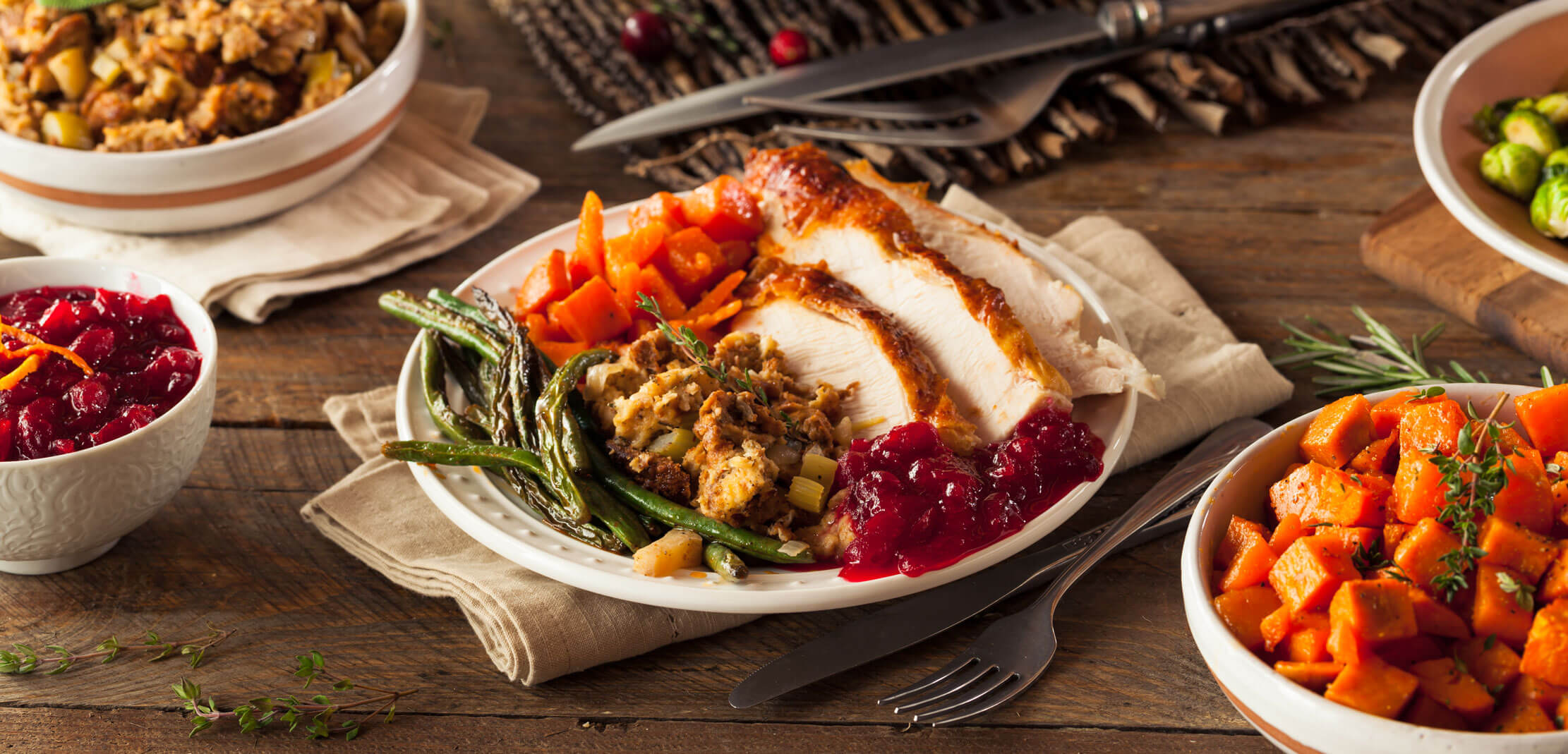
Aim for half a plate of non-starchy vegetables (e.g., salad, green beans, broccoli, cauliflower), a quarter plate of lean meat, and a quarter plate of complex carbohydrates (e.g., whole grains, carrots, butternut squash). Add starches and sweets to your plate last, when you are likely to have less room for them.
Watch portion control
For managing your blood sugar, how much you eat is just as important as what you eat. Try to keep serving sizes to about the size of your fist, or less.
And remember, you don’t have to eat everything on your plate. In fact, pushing your plate away before it’s empty is a great strategy for avoiding overeating.
Also, as it can take up to 20 minutes for your body to recognize that you’re full, strive to eat slowly, put utensils down between bites, and drink plenty of water.
Adhere to your routine
A Thanksgiving gathering may be a special time, but when it comes to managing your blood sugar, you are wise to treat it as just another day.
That’s not to say you shouldn’t relish your time with family or friends or not fully enjoy the festivities. But the holiday shouldn’t deter you from sticking to the daily routine that serves you well as you live with diabetes.
Test your glucose regularly, try to adhere to your normal sleep schedule, and maintain your regular eating habits as much as possible.
You will also want to check with your provider to ensure you have an adequate quantity of testing supplies and insulin. This will be especially important if you are traveling for the holiday.
Maintain a healthy lifestyle
Good habits also extend to physical activity.
Are your cousins going out for a post-dinner walk? Tag along. Spending the holiday near a gym? Duck out in the morning for a quick workout. Is a touch football game part of your family’s holiday festivities? Join in.
Watching your alcohol consumption is another smart practice during the holidays. Alcohol can interfere with liver function and blood sugar levels and can impede the effectiveness of some medications.
If you do drink, avoid sugary mixed drinks and instead opt for a light beer or a single glass of wine. And monitor your blood sugar closely.
Give yourself a break
While it’s helpful for those with diabetes to follow the advice detailed in this blog, lapses can happen. You may overeat or not make the best food choices. Or you may get swept up in the festivities and abandon your routine.
If it happens, don’t think you’ve somehow “failed Thanksgiving.” The holidays can be stressful enough without putting more stress on yourself.
Instead, give yourself a break and strive to get back to your healthy ways as soon as possible.
Have a happy—and informed—Thanksgiving
Remember, we provide free Diabetes Tracking Booklets to help patients monitor and manage their blood sugar levels. Just ask your provider at your next appointment.
If you need additional guidance on how to manage your diabetes during the holidays, reach out to your health provider or contact Barbour Community Health Association.
This year, give thanks for good health. And have a holiday to remember!